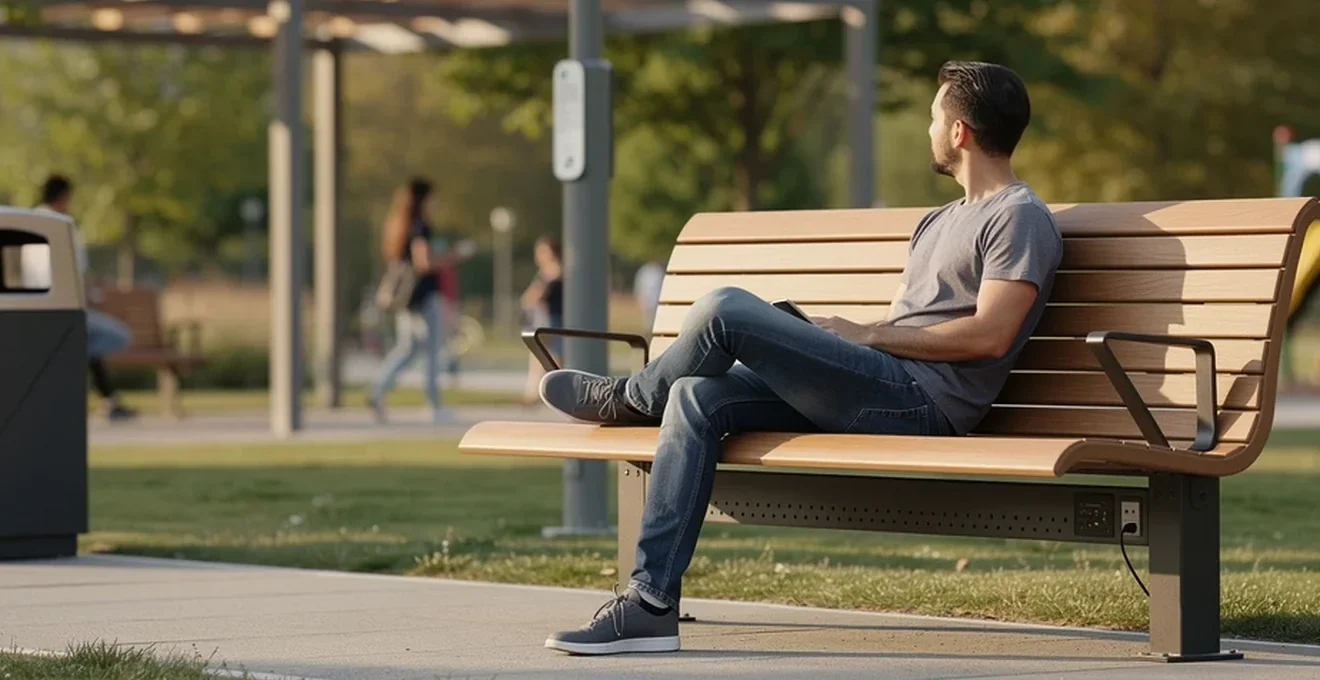
Public parks succeed or fail on the quality of the experience they offer, and much of that experience comes down to the furniture and infrastructure visitors interact with, often without noticing. Seating, bins, shade, signage, play equipment and smart technology all shape how long people stay, how comfortable they feel and whether they return. When these elements are designed thoughtfully, dwell time increases, maintenance costs fall, and parks become genuine community destinations rather than spaces people simply pass through. This article looks at the practical design decisions behind well-furnished parks, from anthropometric seating profiles to solar-powered wayfinding totems, and explains why each choice matters for visitor satisfaction and operational efficiency.
Ergonomic seating design shapes dwell time and comfort
Seating is arguably the single most influential piece of park furniture. Comfortable, well-placed seats encourage visitors to pause, relax and feel part of their surroundings, and that increased dwell time has measurable knock-on effects for nearby retail and food and beverage areas. Finding the right balance of seating density to available floor space can produce an immediate increase in user satisfaction, and the reverse is equally true: rows of hard, uninviting seating with no sense of place tend to be avoided rather than used.
Anthropometric considerations in bench and chair profiles
Effective bench design starts with the human body. Seat height, depth and width need to accommodate a wide range of body types and ages, from children to elderly visitors, without forcing anyone into an awkward posture. Profiles that are too deep can strain the lower back, while seats that are too narrow limit who can use them comfortably. Getting these dimensions right is a foundational step before any aesthetic decisions are made.
Fsc-certified timber versus recycled HDPE composite slats
Material choice affects both longevity and the story a park tells about its values. FSC-certified timber offers a warm, natural aesthetic and is often associated with sustainably managed forests, while recycled HDPE composite slats provide a low-maintenance, weather-resistant alternative that diverts plastic waste from landfill. Neither option is universally superior; the right choice depends on climate, budget and the character the park wants to project. What matters most is that materials and manufacturing reflect a genuine, long-term commitment to the place they serve, since furniture can start conversations around sustainability and environmental responsibility that resonate with visitors.
Backrest angles and lumbar support for extended seating
For benches intended to support longer stays, backrest angle and lumbar support become critical. A slight recline with contoured lower-back support allows visitors to sit for extended periods without discomfort, which is particularly valuable near play areas, viewpoints or food and beverage zones where people naturally linger longer.
Modular seating configurations for group gatherings
Not every visitor wants a fixed, forward-facing bench. Modular seating that can be arranged into clusters supports conversation, group gatherings and informal networking, turning a simple seat into a meeting point. Curved or flowing seating lines, in particular, invite physical interaction and open conversation, allowing groups to face one another naturally rather than sitting in a rigid row. This flexibility also gives architects and park managers a tool to adapt layouts as needs change throughout the day or across seasons.
Strategic placement of litter bins reduces maintenance costs
Litter management is unglamorous but essential to visitor perception. A park that looks unkempt undermines even the best seating or landscaping design, and poorly placed bins lead to overflow, litter drift and higher cleaning costs. Strategic placement, informed by actual visitor flow, keeps parks looking cared for while reducing the burden on maintenance teams.
Bin density ratios per footfall in High-Traffic zones
Bin provision should be proportionate to footfall rather than spread evenly across a site. High-traffic zones such as entrances, play areas and food kiosks generate far more waste per square metre than quiet corners of a park, so density ratios need to reflect actual usage patterns. Collating evidence of real visitor behaviour and circulation, rather than relying on assumptions, allows managers to place bins where they will actually be used, avoiding both overflow in busy areas and wasted resources in quiet ones.
Dual-stream recycling units for waste segregation
Dual-stream units that separate general waste from recyclables support sustainability goals and make it easier for visitors to dispose of items responsibly. Clear labelling and consistent placement alongside general bins help visitors form the habit of segregating waste without needing to think twice.
Corrosion-resistant galvanised steel enclosures
Outdoor bin enclosures face constant exposure to rain, UV light and temperature swings. Galvanised steel provides the corrosion resistance needed to keep enclosures structurally sound and visually presentable over many years, reducing the frequency of replacement and the associated cost and disruption.
Shade structures and pergolas enhance thermal comfort
Thermal comfort directly affects how long visitors are willing to stay outdoors. Shade structures and pergolas extend the usable hours of a park across the day and the seasons, protecting seating areas, play zones and pathways from harsh sun while adding architectural interest.
Cantilever canopy systems for unobstructed sightlines
Cantilever canopies provide shade without the visual clutter of multiple support posts, preserving clear sightlines across a space. This is particularly valuable in areas where visibility matters for safety, wayfinding or simply for maintaining an open, welcoming feel.
Uv-stabilised polycarbonate roofing panels
Roofing materials for canopies need to withstand prolonged UV exposure without discolouring or becoming brittle. UV-stabilised polycarbonate panels are a common solution, offering durable, translucent coverage that filters harsh sunlight while still allowing natural light through.
Green pergolas with climbing vegetation for microclimate control
Pergolas planted with climbing vegetation combine shade provision with biophilic benefits. As leaders in biophilic furniture design have noted, nature-inspired design with organic shapes and natural materials creates an ease of use and a calm, mindful atmosphere. Green pergolas extend this principle to structural elements, moderating the microclimate beneath them while reinforcing a park’s connection to its natural setting.
Wayfinding signage systems improve navigational flow
Clear navigation reduces visitor frustration and supports safety, particularly in larger parks with multiple entrances, facilities and attractions. Wayfinding is not just about signage design; it also depends on visibility and connectivity analysis to understand how legible a space actually feels to the people moving through it.
Braille and tactile paving integration for inclusive access
Inclusive wayfinding accounts for visitors with visual impairments through Braille signage and tactile paving that guide movement along key routes and alert users to changes in level or direction. Building this into the design from the outset, rather than retrofitting it, produces a more coherent and genuinely accessible experience for all users.
Solar-powered illuminated totems for Night-Time visibility
Solar-powered totems keep signage visible after dark without adding to a park’s electricity costs or requiring extensive cabling. This supports both safety and confidence for visitors using the park in the evening, extending its useful hours without a heavy infrastructure investment.
Pictogram standardisation aligned with ISO 7001
Standardised pictograms, aligned with recognised international symbol conventions, allow visitors from different backgrounds and language groups to navigate a park intuitively. Consistency across signage reduces cognitive load and reinforces trust in the wayfinding system as a whole.
Play equipment specifications drive family footfall
Play areas are a significant driver of family visits, and the quality and safety of equipment directly influence whether families choose to return. Specifications here are not optional extras but baseline requirements for responsible park design.
EN 1176 compliance for safety surfacing and fall zones
Safety surfacing and defined fall zones around play equipment need to meet recognised safety standards, ensuring that impact-absorbing surfaces are appropriate to the height and type of equipment installed. Compliance protects children while giving parents and carers confidence in the space.
Inclusive playground design for Wheelchair-Accessible roundabouts
Inclusive design extends play opportunities to children with mobility impairments through equipment such as wheelchair-accessible roundabouts, ensuring that play areas serve the whole community rather than excluding certain visitors by default.
Natural play elements using robinia timber
Natural materials such as Robinia timber bring a tactile, organic quality to play equipment that contrasts with standardised plastic structures. Robinia is valued for its durability outdoors, and its use reflects the same biophilic principle seen elsewhere in placemaking: natural materials with variation in tone and texture create a calmer, more inviting atmosphere for the people using the space.
Smart furniture integration supports Digital-Age visitors
Modern park visitors increasingly expect connectivity alongside comfort. Smart furniture integrates technology into familiar forms, adding functional value without compromising the character of the space.
USB and wireless charging ports embedded in bench design
Embedding charging points into benches allows visitors to top up their devices while they rest, extending the time they are willing to stay and adding a practical incentive to choose one seating area over another. Collaborative seating collections that integrate wireless and USB charging alongside customisable backrests demonstrate how this can be achieved without turning furniture into obtrusive technology.
Iot sensors for Real-Time occupancy monitoring
Sensors that track seating or space occupancy in real time give park managers an evidence base for operational decisions, from cleaning schedules to future seating layouts. This kind of data collection supports capacity assessments and helps balance circulation, dwelling and queuing needs across a site.
Solar-integrated lighting bollards along pathways
Solar-integrated bollards provide low-level path lighting without reliance on mains electricity, improving safety and legibility after dark while keeping running costs minimal. Positioned alongside wayfinding totems and seating areas, they help extend a park’s active hours into the evening.