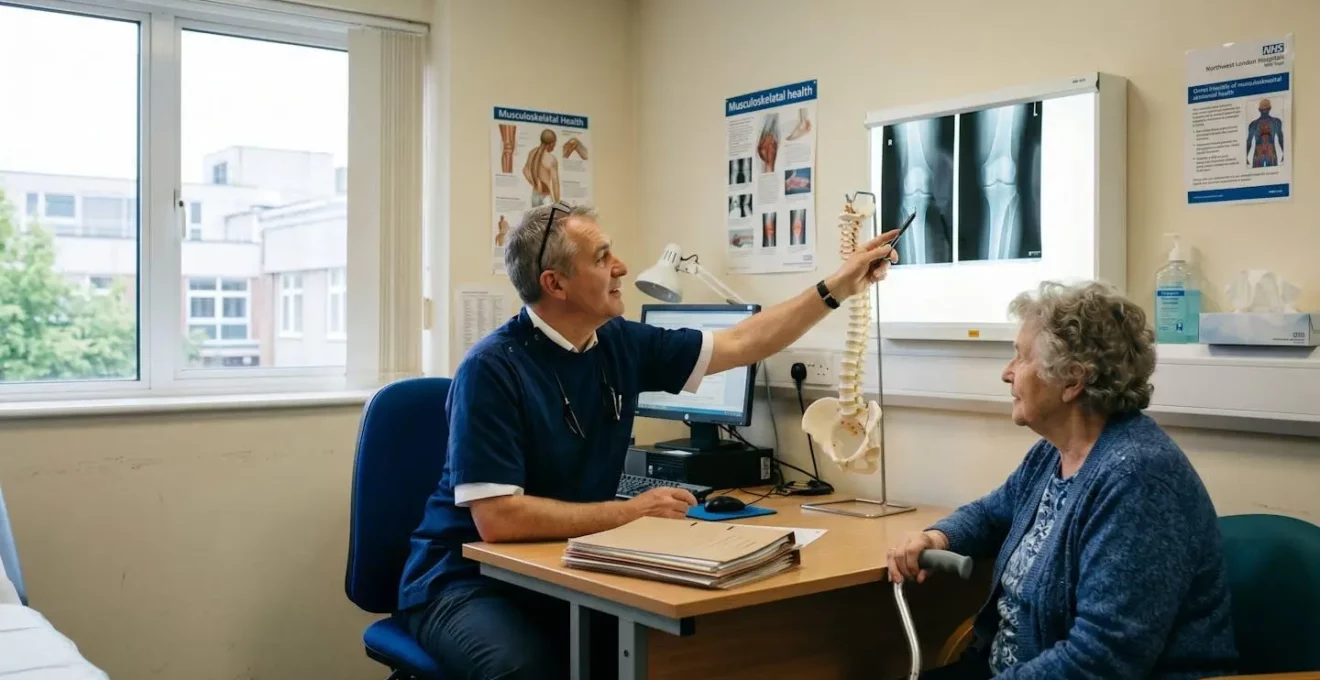
This content is provided for informational purposes only and does not constitute medical advice. Consult a qualified healthcare professional for any decisions concerning your health or the health of a family member.
The challenge facing elderly patients and their families lies not in whether age permits surgery, but in understanding which assessment frameworks determine surgical appropriateness, what outcome evidence reveals about realistic expectations, and how pre-operative optimisation influences success rates. This evidence synthesis examines current surgical indications, procedural options, recovery trajectories, and risk management strategies specific to elderly populations navigating knee surgery decisions within the NHS pathway.
Essential takeaways for surgical decision-making
- Surgical candidacy depends on functional assessment and comorbidity profile, not chronological age alone
- National Joint Registry data shows high satisfaction rates in appropriately selected patients over 75
- Comprehensive geriatric assessment identifies modifiable risk factors to optimise outcomes
- Multidisciplinary evaluation (orthopaedic surgeon, geriatrician, anaesthetist) essential for complex cases
Understanding the full assessment framework matters profoundly for elderly patients and families navigating surgical decisions. The shift from age-based gatekeeping to evidence-based individualised evaluation means that many patients previously excluded from surgical consideration can now access procedures that restore independence and quality of life. This paradigm change, however, demands comprehensive understanding of what determines surgical candidacy beyond the birth certificate.
The following sections examine the clinical evidence, procedural options, and outcome data that inform contemporary surgical decision-making in elderly populations. From frailty scoring systems to recovery trajectories, this framework equips patients and families to engage meaningfully with specialist assessment and make informed choices aligned with individual health status and functional goals.
- Age as a factor: rethinking surgical candidacy for knee procedures
- Matching surgical approaches to patient profile and pathology
- What outcome data reveals about surgical recovery in later life
- Navigating the risk landscape: complications, contraindications and decision frameworks
- Frequently asked questions about knee surgery in elderly patients
Age as a factor: rethinking surgical candidacy for knee procedures
No absolute age limit exists for knee surgery in UK clinical practice. National Institute for Health and Care Excellence (NICE) guidelines and British Orthopaedic Association standards emphasise that surgical candidacy is determined by functional assessment, comorbidity profile, and patient-specific factors rather than chronological age alone. National Joint Registry data demonstrates that a substantial proportion of knee replacements in the UK are performed in patients aged 75 and above, with outcome satisfaction rates comparable to younger cohorts when appropriate patient selection criteria are applied.
The paradigm shift away from age-based exclusion reflects accumulating clinical evidence that biological age — measured through frailty assessment, functional capacity testing, and comprehensive geriatric evaluation — predicts surgical outcomes far more reliably than the number of years since birth. A robust 78-year-old with minimal comorbidities, good nutritional status, and preserved cognitive function presents fundamentally different surgical risk than a frail 72-year-old with multiple chronic conditions and declining independence.
Contemporary surgical assessment employs standardised frailty scoring systems, such as the Clinical Frailty Scale, which categorises patients from “very fit” through to “severely frail” based on observable functional markers. Research demonstrates that frailty status correlates directly with post-operative complication rates, recovery trajectories, and long-term functional outcomes, whilst chronological age shows weak predictive value once frailty and comorbidity burden are accounted for. NICE guideline NG226 on osteoarthritis management explicitly prohibits excluding patients from surgical referral on grounds of age, sex, smoking status, or obesity.
The practical implication for elderly patients considering knee surgery centres on comprehensive pre-operative assessment. Rather than accepting age-based surgical denial, individuals should seek evaluation that incorporates cardiopulmonary fitness testing, cognitive screening, nutritional status assessment, medication review, and realistic discussion of functional goals.
Matching surgical approaches to patient profile and pathology
Surgical procedure selection for elderly patients requires matching technique to three critical variables: the anatomical pattern of joint damage, the patient’s biological reserve and comorbidity burden, and realistic functional goals aligned with pre-operative capacity. Procedure choice significantly influences both perioperative risk and rehabilitation demands. An 82-year-old with single-compartment medial osteoarthritis may prove an excellent candidate for unicompartmental (partial) replacement, avoiding the physiological stress associated with total knee arthroplasty. Consulting an experienced knee and orthopaedic surgeon with geriatric surgical experience ensures appropriate procedure selection and optimised surgical technique for older patients.

Surgical procedure selection in elderly populations requires matching technique to patient biology and realistic functional goals. The following comparison synthesises procedural characteristics relevant to elderly surgical candidates, incorporating factors that standard descriptions frequently omit: frailty tolerance, bone quality requirements, and NHS availability patterns. This framework aids informed discussion during pre-operative consultation.
| Procedure Type | Best Suited For | Recovery Timeline | Frailty Considerations |
|---|---|---|---|
| Total Knee Replacement | Multicompartment osteoarthritis, severe cartilage loss | 6-12 weeks basic mobility, 3-6 months optimal function | Suitable for robust elderly; demands intensive rehabilitation engagement |
| Unicompartmental Replacement | Single-compartment disease, preserved ACL, minimal deformity | 4-8 weeks basic mobility, faster return to baseline function | Preferred option for frail patients when anatomically indicated |
| Arthroscopic Intervention | Specific meniscal tears, loose bodies (limited role in degenerative osteoarthritis) | 1-3 weeks for minor procedures | Minimal surgical stress; suitable for very frail patients with targeted pathology |
Total knee replacement in the elderly population
Total knee arthroplasty remains the definitive intervention for end-stage multicompartment osteoarthritis causing substantial pain and functional limitation despite conservative management. Surgical technique in elderly populations incorporates specific adaptations: meticulous soft-tissue balancing to accommodate age-related ligamentous laxity, consideration of bone quality when selecting implant fixation methods, and increasingly, robotic-assisted positioning to optimise alignment in patients with complex deformity or osteoporotic bone. National Joint Registry surveillance data demonstrates that revision rates, whilst showing slight increases in older age bands, remain acceptably low when patient selection incorporates comprehensive geriatric assessment.
Partial knee replacement and unicompartmental options
Unicompartmental knee replacement offers a less invasive alternative for patients with isolated medial or lateral compartment arthritis and intact cruciate ligaments. The procedure preserves normal knee anatomy outside the affected compartment, typically resulting in more natural knee kinematics and faster rehabilitation. Clinical evidence suggests particular advantages for carefully selected elderly patients: reduced surgical trauma, shorter anaesthetic duration, and accelerated mobilisation. Candidate selection proves critical; inappropriate patient selection leads to early failure and revision surgery.
Arthroscopic interventions and minimally invasive techniques
Arthroscopic (keyhole) surgery addresses specific intra-articular pathology through small incisions using camera guidance. In elderly populations, arthroscopy plays a limited but valuable role: removal of loose bodies causing mechanical locking, treatment of specific traumatic meniscal tears, and occasionally synovectomy for inflammatory conditions. Clinical consensus recognises minimal benefit from arthroscopic debridement for degenerative osteoarthritis alone. The appeal in frail elderly patients lies in minimal physiological stress and day-case delivery, though realistic outcome discussions remain essential.
What outcome data reveals about surgical recovery in later life
Outcome evidence for knee surgery in elderly populations challenges pessimistic assumptions whilst maintaining realistic expectation-setting grounded in robust surveillance data. peer-reviewed systematic review published in the Journal of Clinical Medicine (2023) analysed 18 studies encompassing 20,826 patients aged 65 and above, finding that total knee replacement consistently produces reduced pain, improved function, and increased quality of life, with functional improvements sustained from 6 months to 10 years post-operatively.
Consider the case of a 77-year-old retired teacher with isolated medial compartment osteoarthritis and well-controlled hypertension. Despite initial hesitation about surgical risk at her age, comprehensive geriatric assessment revealed robust functional status, preserved cognitive function, and minimal frailty markers. Following unicompartmental knee replacement with enhanced recovery protocols, she regained independent household mobility within 6 weeks and returned to weekly community walking by 4 months post-operatively. Her experience demonstrates that appropriately selected elderly patients can achieve outcomes comparable to younger cohorts when biological age assessment, rather than chronological age, guides surgical decision-making.
UK-specific surveillance through the National Joint Registry provides granular age-stratified data. A year-on-year decline in revision rates measured by the NJR 22nd Annual Report demonstrates overall improvement in surgical outcomes, though the registry documents that revision rates show modest increases across advancing age bands. Current 10-year revision estimates for total knee replacement stand at approximately 3.11%.
High satisfaction
Patient satisfaction rate in appropriately selected over-75s following knee replacement surgery
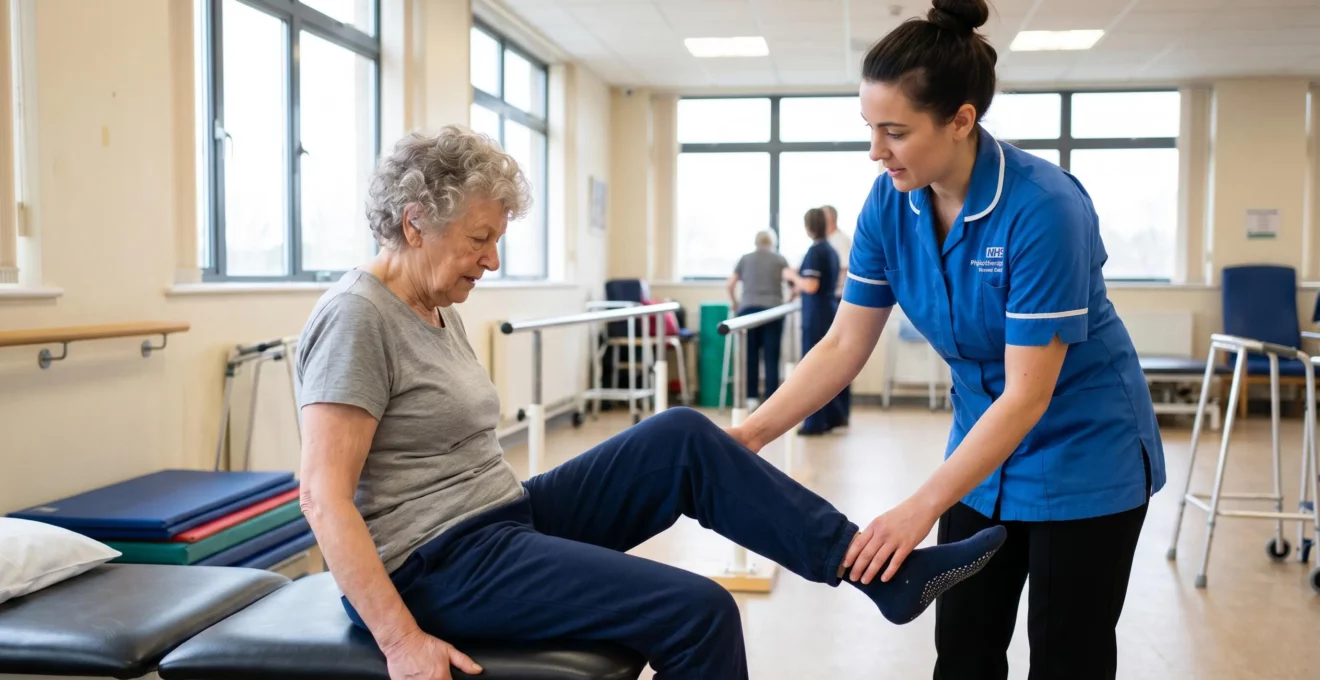
Recovery trajectories in elderly populations demonstrate considerable individual variation, influenced by pre-operative functional capacity, comorbidity burden, nutritional status, and rehabilitation engagement. Typical timelines for appropriately selected elderly patients include basic mobility restoration within 6-12 weeks, with optimal functional recovery requiring 3-6 months of progressive physiotherapy. Pre-operative nutritional status significantly impacts wound healing, immune function, and rehabilitation capacity in elderly patients. Prehabilitation programmes addressing strength, cardiovascular fitness, and nutritional optimisation during the pre-operative waiting period demonstrate measurable improvements in post-surgical outcomes.
Realistic expectation-setting remains essential. Elderly patients should anticipate substantial pain relief and functional improvement, but complete restoration to youthful knee function proves unrealistic. The goal centres on pain reduction sufficient to restore independence in essential activities: household mobility, personal care, community access, and meaningful social engagement.
Navigating the risk landscape: complications, contraindications and decision frameworks
Risk assessment in elderly surgical candidates requires structured evaluation distinguishing absolute contraindications from relative contraindications. Absolute contraindications remain rare: active knee sepsis, severe peripheral vascular disease threatening limb viability, or medical instability precluding safe anaesthesia. Most age-related considerations constitute relative contraindications amenable to pre-operative optimisation.
Age-specific complication risks warrant frank discussion. Post-operative delirium affects approximately 15-25% of elderly surgical patients according to geriatric surgical literature, representing acute confusion typically resolving within days to weeks. Risk factors include pre-existing cognitive impairment, polypharmacy, and physiological stress from surgery. Prevention strategies — maintaining orientation through familiar objects, early mobilisation, and pain management without excessive opioid use — substantially reduce incidence. Other recognised risks in elderly populations include venous thromboembolism (estimated at 1-3% despite prophylaxis), surgical site infection (remaining low at under 2%), and cardiovascular events, with surgical mortality estimated at under 1% in appropriately screened populations.
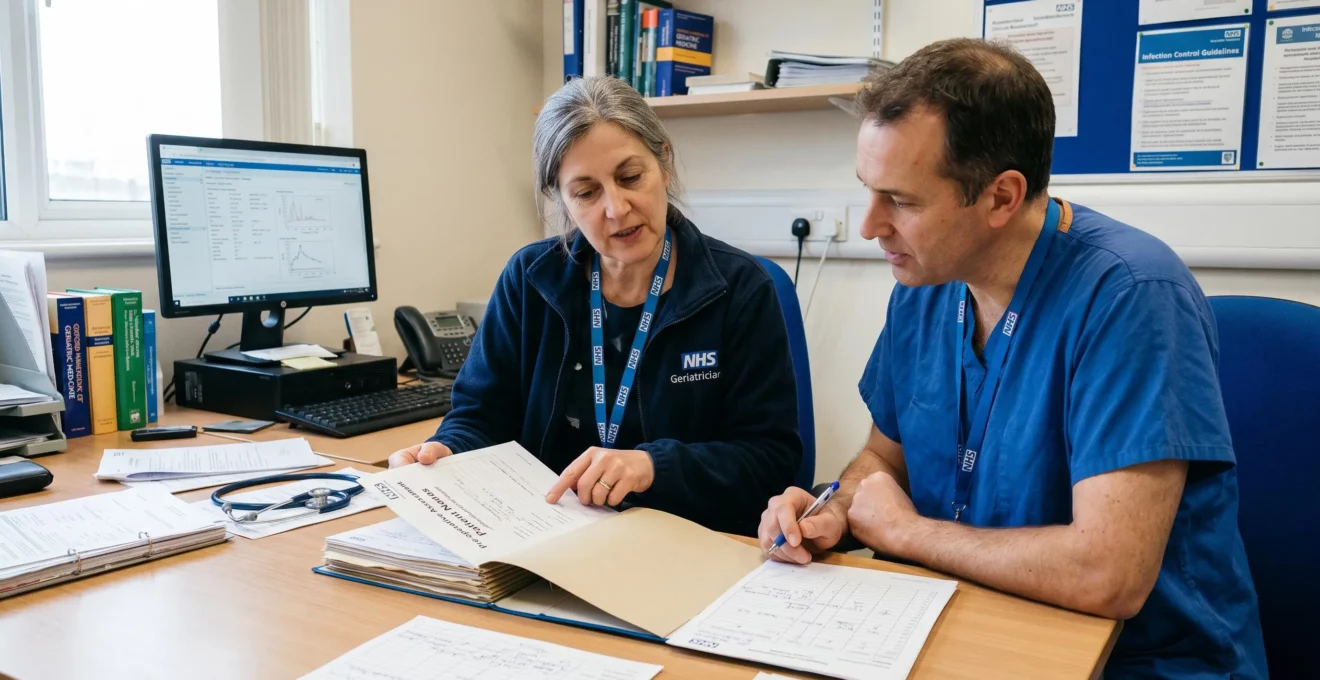
Pre-operative optimisation transforms many relative contraindications into acceptable surgical risk. Modifiable factors amenable to intervention include nutritional status (protein intake assessment and supplementation, vitamin D correction), medical optimisation (anticoagulation management, diabetes control with HbA1c target under 7.5%), physical conditioning (quadriceps strengthening, cardiovascular fitness improvement), and psychological preparation (realistic expectation-setting, anxiety management). Comprehensive pre-operative assessment increasingly recognises psychological resilience and mental health status as important factors in surgical candidacy and recovery capacity. Multidisciplinary team evaluation — involving orthopaedic surgeon, geriatrician, and consultant anaesthetist — provides the most robust assessment framework for complex elderly cases.
- Individual surgical risk varies significantly based on specific health status, comorbidities, and functional capacity
- This content reflects general clinical evidence and cannot replace personalised medical assessment
- Surgical techniques, guidelines, and outcome data continue to evolve with medical advances
Explicit risks of inappropriate decision-making:
- Proceeding with surgery without comprehensive geriatric and anaesthetic assessment
- Underestimating rehabilitation demands and post-operative care requirements
Essential consultation: Consultant orthopaedic surgeon with geriatric surgical experience, supported by geriatrician and anaesthetist assessment for comprehensive pre-operative evaluation.
Frequently asked questions about knee surgery in elderly patients
Is there an age limit for knee replacement surgery?
No absolute age limit exists in UK clinical practice. NICE guidelines emphasise that surgical candidacy is determined by functional capacity, comorbidity assessment, and overall health status rather than age alone. Patients in their 80s and 90s can be appropriate surgical candidates when comprehensive assessment demonstrates acceptable risk.
How long does recovery take for elderly patients?
Recovery timelines vary based on pre-operative fitness and comorbidity burden. Most elderly patients achieve basic mobility within 6-12 weeks. Optimal functional recovery typically requires 3-6 months of progressive rehabilitation. Frail patients may experience slower recovery requiring extended physiotherapy support.
What are the alternatives to surgery for older adults with knee pain?
Conservative management options include structured physiotherapy, weight optimisation, walking aids to reduce joint loading, oral analgesia, intra-articular injections, and activity modification. Surgery is typically considered when conservative measures fail to provide adequate pain relief and functional improvement.
Will anaesthesia cause memory problems in elderly patients?
Post-operative delirium affects approximately 15-25% of elderly surgical patients and typically resolves within days to weeks. Persistent cognitive decline is less common and usually associated with pre-existing cognitive vulnerability. Modern anaesthetic techniques and delirium prevention protocols substantially reduce cognitive risks.
Can patients in their 80s or 90s have successful knee surgery?
Yes, when appropriate patient selection and comprehensive pre-operative assessment are applied. National Joint Registry data demonstrates successful outcomes in very elderly patients who are robust, cognitively intact, and motivated for rehabilitation. Success depends more on biological age than chronological age.